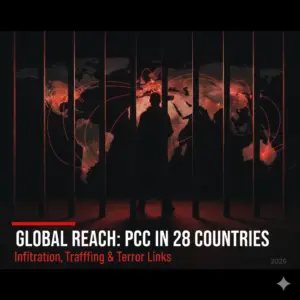

On June 5, 2026, the United States formally designated Brazil’s two largest criminal organizations — Primeiro Comando da Capital (PCC) and Comando Vermelho (CV) — as Foreign Terrorist Organizations (FTOs). The groups had already been designated as Specially Designated Global Terrorists (SDGTs) on May 28, 2026, with the FTO designation becoming effective upon publication in the Federal Register. (tauilchequer.com.br)
The decision represents a significant shift in the treatment of transnational organized crime and may have far-reaching consequences for financial institutions, multinational corporations, investors, and supply chains operating in Brazil and throughout Latin America.
1. Immediate Legal Consequences
The FTO designation introduces a legal framework traditionally reserved for organizations such as ISIS, Hezbollah, and Al-Qaeda.
Under U.S. law, providing “material support” to an FTO can trigger severe civil and criminal liability. The concept of material support is broad and may include financial services, transportation, logistics, technology, insurance, consulting, or other forms of assistance that directly or indirectly benefit the designated organization. (paulhastings.com)
In addition, U.S. authorities gain expanded jurisdiction to investigate transactions, freeze assets, and pursue enforcement actions involving entities connected to the designated groups. (state.gov)
2. Impact on Banks and Financial Institutions
The banking sector is expected to face the most immediate compliance burden.
Financial institutions with exposure to Brazil will likely enhance:
- Know Your Customer (KYC) procedures;
- Anti-Money Laundering (AML) controls;
- Counter-Terrorist Financing (CTF) screening;
- Beneficial ownership investigations;
- Enhanced Due Diligence (EDD) reviews.
Recent investigations cited by authorities and market analysts have highlighted alleged money-laundering structures involving fuel distributors, real-estate operations, fintechs, investment vehicles, and cash-intensive businesses linked to PCC and CV networks. (Reuters)
As a result, correspondent banks in the United States and Europe may require additional certifications and representations from Brazilian counterparties, increasing compliance costs and onboarding times. (Reuters)
3. Risks for Brazilian Companies
The designation extends beyond the financial sector.
Companies operating in regions where PCC or CV exercise territorial influence may face increased scrutiny from investors, lenders, insurers, and business partners. This includes sectors such as:
- Logistics and transportation;
- Mining;
- Energy;
- Agribusiness;
- Telecommunications;
- Fuel distribution;
- Construction and real estate;
- Consumer franchises. (Reuters)
Even where no intentional relationship exists, payments, extortion schemes, security arrangements, or commercial relationships that indirectly benefit the organizations may become subjects of compliance review.
4. Exposure of Foreign Corporations
Multinational corporations listed in the United States face particular exposure.
Under the U.S. Anti-Terrorism Act, plaintiffs may attempt to bring civil actions against companies alleged to have provided support to entities associated with an FTO. Similar litigation theories have previously been used against banks accused of providing services to terrorist organizations. (paulhastings.com)
Accordingly, foreign corporations with operations in Brazil should reassess:
- Third-party risk programs;
- Distributor and agent screening;
- Supply-chain integrity;
- Joint-venture relationships;
- Cash-payment controls;
- Sanctions and terrorism-financing procedures.
5. Fintechs and Alternative Financial Platforms
Fintechs may face disproportionate challenges.
Because some criminal investigations have allegedly identified the use of digital payment structures, investment funds, and fintech channels for money-laundering purposes, regulators and correspondent institutions are expected to apply heightened scrutiny to the sector. (Reuters)
Smaller institutions lacking sophisticated AML and sanctions infrastructure may experience greater pressure from banking partners and investors.
6. Foreign Investment and Country Risk
Brazilian authorities have expressed concern that the designation may increase perceived country risk and discourage foreign investment. Officials have warned that investors could reassess exposure to sectors viewed as vulnerable to organized-crime infiltration. (Reuters)
Although the designation does not create sanctions against Brazil itself, it introduces a new layer of legal and reputational risk that international financial markets will likely incorporate into compliance assessments.
Conclusion
The designation of PCC and CV as Foreign Terrorist Organizations marks one of the most consequential developments in the intersection of sanctions law, anti-money laundering regulation, and transnational organized crime in Latin America.
For banks, fintechs, investment funds, insurers, and multinational corporations, the principal challenge will not be direct dealings with PCC or CV, but rather identifying and mitigating indirect exposure through counterparties, supply chains, territorial operations, and financial flows.
Organizations with operations in Brazil should immediately reassess AML, sanctions, counter-terrorism financing, and third-party risk frameworks to address the heightened regulatory environment created by the June 5, 2026 designation.